
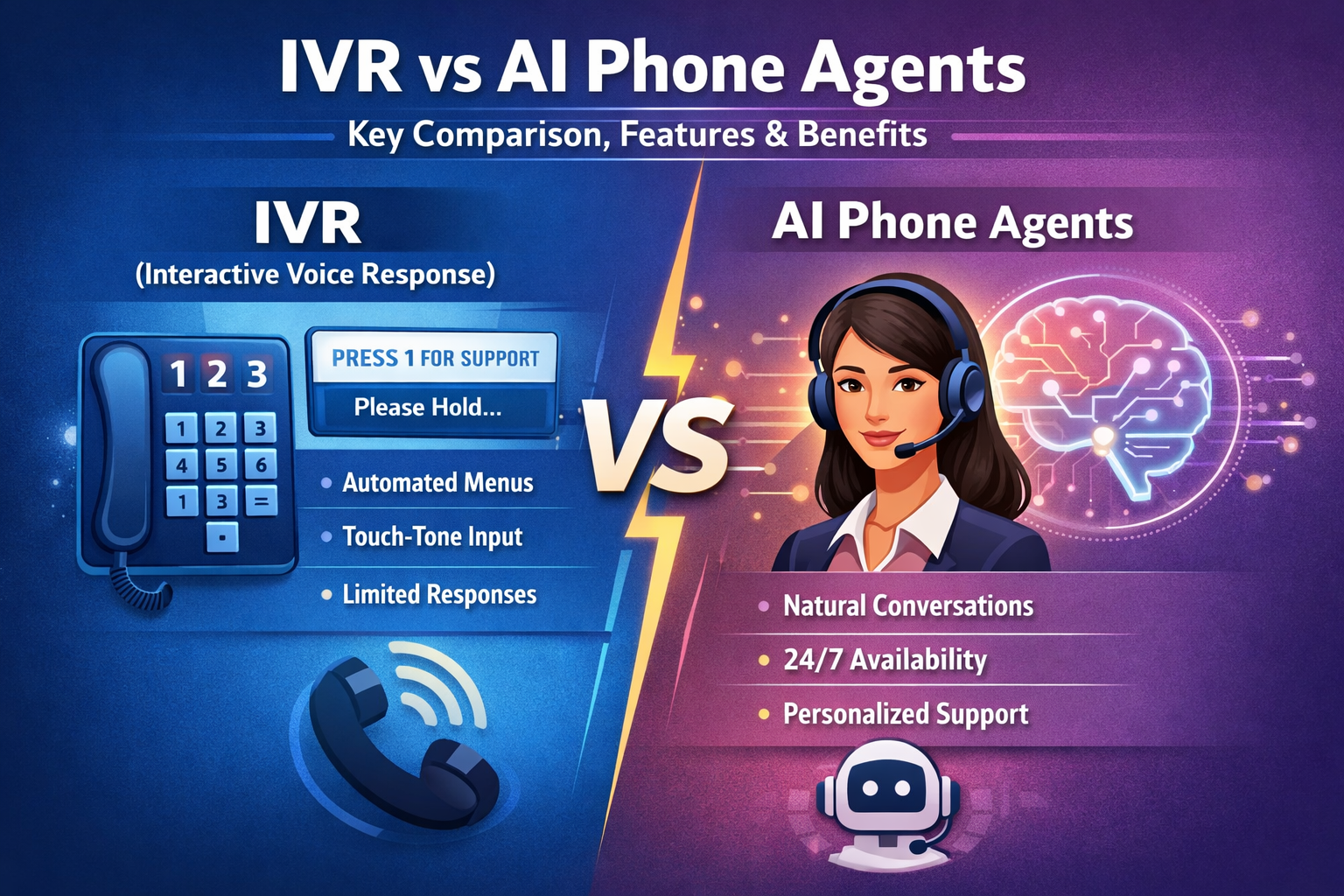
IVR vs AI Phone Agents: Key Comparison, Features & Benefits
Small businesses are changing how they handle calls. For years, you’ve used old menu systems that make callers press many buttons. This outdated approach often frustrates customers who want quick, human-like help.

Now, companies are moving to smart, conversational interfaces. This meets the need for speed and personalization. In the ivr vs ai phone agent debate, choosing the right technology can drastically improve your bottom line and save time. Knowing the difference between old and new systems is key to updating your business.
We’re here to guide you through this change without needing tech know-how. This guide shows how these technologies work and why upgrading is crucial for staying ahead in today’s market.
Key Takeaways
- Traditional menu systems often create friction and customer frustration.
- Modern conversational tools offer personalized, efficient service around the clock.
- Upgrading your communication infrastructure directly impacts your business profitability.
- Small business owners can implement advanced automation without needing coding skills.
- Choosing the right technology helps you reclaim time and scale operations effectively.
Understanding the Evolution of Business Telephony
Business telephony is changing from static systems to dynamic, human-like conversations. For years, companies used fixed hardware for calls. Now, they’re moving to flexible software that focuses on the caller’s experience.
It’s important to know the difference between ivr vs ai phone agent to update your customer support. Old systems made callers go through endless menus. New tools aim to solve problems through natural talk.
The limitations of touch-tone navigation
Old phone systems use touch-tone navigation, leading to long lists of options. This can be very frustrating for callers. They often get stuck in loops that don’t meet their needs. Efficiency is lost when they press “1” for sales and “2” for support, only to wait forever.
These static menus can’t adapt to each caller’s needs. Using these outdated systems can lead to high abandonment rates and unhappy customers. It’s time to leave the “press one for more options” era behind.
The shift toward conversational interfaces
The industry is moving toward conversational interfaces that understand human intent. A big part of this change is learning how to use Zapier AI agents to automate complex tasks. Unlike standard Zaps, which do one thing, Zapier AI agents can handle complex conversations in real-time.
When comparing Zapier agents vs Zaps, the main difference is handling ambiguity. A standard Zap does one task, but an AI agent can understand a customer’s request and take multiple actions. This change lets small businesses offer top-level support without needing big teams.
| Feature | Legacy IVR | AI Phone Agent |
|---|---|---|
| Interaction Style | Static Menu Trees | Conversational AI |
| Input Method | DTMF (Keypad) | Natural Language |
| Flexibility | Low | High |
| Resolution Speed | Slow | Instant |
Defining IVR vs AI Phone Agent Comparison Features Benefits
Understanding the difference between old systems and new AI is key for your growth in 2025. When you compare phone systems, you see a big gap. Knowing how to choose the right solution for your business is crucial.
Distinguishing between menu-based routing and intent recognition
Old systems use menu-based routing, which can be slow and annoying. Callers have to listen to long lists and press numbers. On the other hand, intent recognition uses AI to understand what callers need.
Tools like Zapier AI automation 2025 help bridge the gap. While Zapier agents vs Zaps are known, AI agents can handle complex conversations. This means your business can solve problems without needing a human.
Why businesses are moving beyond static phone trees
Static phone trees are outdated because they slow down customers. Every step in a menu makes it more likely for a customer to hang up. Now, businesses are turning to AI to make sure every caller feels understood right away.
The table below shows the main differences to consider when looking at your current setup:
| Feature | Traditional IVR | AI Phone Agent |
|---|---|---|
| Navigation | Touch-tone (DTMF) | Natural Language |
| Flexibility | Rigid, linear paths | Dynamic, intent-based |
| Resolution | Basic routing only | End-to-end task completion |
| User Experience | Often frustrating | Conversational and fast |
By moving past interactive voice response comparison, your company can handle more calls easily. This change is not just about tech; it’s about saving time and giving better service to your clients.
Core Features of Traditional Interactive Voice Response Systems
It’s key to know how old phone systems work to see why they might not be working well. Many businesses still use systems that make callers press buttons over and over. This can really upset customers.
Standard DTMF input processing
Old systems use Dual-Tone Multi-Frequency (DTMF) to understand what you press. When you hit a number on your keypad, it makes a tone. The system then turns that tone into a command.
This method is very simple. It only gets the number you press, not what you mean by it. If it’s noisy or you press the wrong button, it might not work right.
Basic call queuing and routing logic
Old systems follow a simple path. They direct calls based on what you choose from a menu. Once you pick something, the call goes into a queue or to a specific person based on rules.
This way is predictable but can’t handle complex situations. If the main person is busy, the system just waits for them. It doesn’t care how urgent your call is.
“The greatest danger in times of turbulence is not the turbulence; it is to act with yesterday’s logic.”
Peter Drucker
Common pitfalls in legacy IVR design
When you compare old IVR systems, you’ll see they often cause “menu fatigue.” Callers have to listen to long lists of options that might not solve their problem.
This makes it hard for businesses to connect with their customers. The table below shows some big problems with old IVR systems compared to new AI ones:
| Feature | Legacy IVR | Modern AI Agent |
|---|---|---|
| Input Method | Keypad (DTMF) | Natural Language |
| Routing | Static Menus | Intent-Based |
| Availability | Business Hours | 24/7 Resolution |
These issues lead to many calls being dropped and higher costs. Knowing these problems is the first step to improving your business’s communication.
Key Capabilities of Modern AI Phone Agents
Today’s AI agents are more than just call routers. They are smart helpers for your customer support team. They don’t just listen; they understand what’s being said to offer meaningful assistance. With advanced ai phone agent features, every caller feels important right away.
Natural Language Understanding for seamless interaction
Old systems make callers go through menus. But modern AI uses Natural Language Understanding (NLU) to get what they mean. Customers can just speak naturally, and the agent gets their request right.
This makes talking to your business better. It builds trust by removing annoying steps. It’s a key ai phone agent benefit for small businesses to stand out.

Real-time sentiment analysis during calls
Modern AI also checks the mood of a call as it happens. It can tell if someone is upset or in a hurry. If it sees a problem, it can change its approach or pass the call to a person.
This stops small problems from becoming big complaints. It keeps your support empathetic and effective, even with tough situations.
Integration with CRM and backend databases
The real strength of these agents is when they link up with your business tools. You can automate tasks with Zapier AI to make sure every call is recorded and useful. For example, a Zapier ChatGPT workflow can summarize calls and update your CRM.
This saves time and keeps your records right. It connects your phone system with your databases. This gives your team a unified view of every customer. It lets you handle lots of calls while still giving each one a personal touch.
Step-by-Step Guide to Evaluating Your Current Phone System
Checking your phone system doesn’t need a computer science degree or a big budget. By looking at how you work now, you can see if you need a change. Knowing the difference between ivr vs ai phone software helps you save time and make customers happier.
Auditing current call abandonment rates
Your call abandonment rate shows how many hang up before talking to someone. If it’s high, your menu might be too complicated or wait times too long. Track this over a week to find out when your system gets overwhelmed.
- Calculate the percentage of calls dropped before connection.
- Compare these figures against industry benchmarks for your sector.
- Look for patterns, such as specific times of day or days of the week.
Identifying bottlenecks in customer support workflows
Bottlenecks hide in repetitive tasks that distract your team. If they’re answering the same questions over and over, your workflow is not efficient. Zapier AI for beginners can help automate these simple questions without coding.
Start by tracing a caller’s journey from dialing your number. Note every wait or confusing menu. Simplifying these paths makes your service smoother and builds trust with clients.
Measuring the cost per resolution in your existing setup
To value your communication tools, calculate the cost per resolution. This means dividing your monthly phone costs by successful customer interactions. Using a no-code AI agent Zapier often lowers this cost because AI handles simple tasks quickly.
Doing a phone system comparison uncovers hidden costs of old technology. You might find your current system is costing more in lost leads than a new, automated one. Empower your business by choosing tools that grow with you, not hold you back.
How to Transition from Legacy IVR to AI-Driven Voice Solutions
You don’t need a computer science degree to update your business communications. Moving from ivr vs ai phone software is more about changing how you interact with customers. It’s about making calls feel more personal by understanding what callers need.

Mapping existing call flows to AI intent models
Begin by reviewing your current phone system to see why people call. Instead of using menus, map these reasons to intent models that AI can quickly get. This turns static menus into a real-time conversation where the AI knows exactly what the caller wants.
It’s like making a map of your customer’s journey. By knowing the top reasons for support calls, you can create specific paths for the AI to solve problems right away. This streamlines your operations and cuts down on wait times.
Selecting the right voice synthesis and recognition providers
Finding the right tech partner is key for a smooth transition. Look for a platform that fits with your current tools to avoid big changes. Many find that using how to use Zapier AI agents is the best way to link their old systems with new tech.
This method lets you connect your voice data to advanced language models without making custom software. It automates responses and keeps costs down. It’s the most efficient way to grow your support team without hiring more people.
Testing AI agents in a sandbox environment
Before going live, make sure your AI system works well. Use a Zapier ChatGPT workflow or Zapier Claude integration in a test area to mimic real calls. This lets you see how the AI handles different voices and questions without affecting your customers.
Testing ensures your AI works right from the start. Keep tweaking your prompts and logic until the AI’s answers feel natural and helpful. Once you’re sure, you can switch to a superior support experience for your customers.
Comparing Operational Costs and Scalability
Choosing between ivr vs artificial intelligence phone systems is a big decision. It’s not just about the cost. You need to think about the value of your communication setup for the future.
Upfront investment versus long-term maintenance
Old systems need expensive hardware and skilled techs for updates. AI solutions, on the other hand, use a subscription model. This makes your costs easier to manage over time.
Even though Zapier AI pricing might seem high, the upkeep costs are much lower. You won’t have to pay for servers or manual programming for simple changes.
Scaling support capacity without increasing headcount
AI can handle many calls at once without needing more staff. This means you can keep service levels high during busy times without the extra cost of training and managing more people.
This flexibility helps your business grow without increasing fixed costs. By automating simple questions, your team can focus on tasks that really make money.
Calculating the return on investment for AI adoption
To figure out your ROI, compare the cost of missed calls or unhappy customers to the cost of automated solutions. You’ll likely see a big improvement in efficiency that pays off quickly.
| Feature | Legacy IVR | AI Phone Agent |
|---|---|---|
| Setup Cost | High (Hardware) | Low (Subscription) |
| Maintenance | Expensive/Manual | Automated/Cloud |
| Scalability | Limited by Staff | Unlimited/Instant |
| Customer Effort | High (Frustrating) | Low (Conversational) |
Try these improvements today by using these five Zapier AI workflows:
- Voice-to-Slack Alert: Automatically post summaries of urgent customer calls to your team channel.
- AI Lead Qualification: Sync caller intent data directly into your CRM to prioritize high-value leads.
- Automated Appointment Scheduling: Let the AI book meetings based on your calendar availability.
- Sentiment-Based Routing: Trigger an email notification to a manager if a caller expresses high frustration.
- Post-Call Follow-up: Send an automated SMS with a link to your FAQ or support portal after a call ends.
Enhancing Customer Experience Through Natural Language Processing
Natural Language Processing (NLP) makes interactions feel more human. It goes beyond simple menus, offering empathy that was once impossible. This way, every caller feels valued, not just another number.
Reducing friction in self-service resolution
Old phone trees can be a nightmare. But ai phone agent features change that. Callers can now speak naturally, getting help faster and feeling happier.
This new way saves time. No more pressing buttons or listening to long lists. It makes the experience smooth and keeps callers interested. This small change makes a big difference in how people see your brand.
Personalizing caller interactions using historical data
Your CRM is full of useful info, but often it’s not used. By linking your voice solution to your CRM, the AI knows who’s calling. It can even recall their recent orders or history.
Personal touches make customers feel special. Instead of asking for an account number, the AI can offer help based on their past actions. This builds loyalty and trust over time.
Handling complex queries that stump traditional IVR
Old systems struggle with questions that aren’t in their menu. But AI agents can understand complex questions. With automate tasks with Zapier AI, you can even solve multi-step problems without a human.
The ai phone agent benefits go beyond just answering calls. They free your team to focus on important tasks. This makes your support team scalable and keeps service high, even as your business grows.
Technical Requirements for Implementing AI Phone Software
You don’t need a computer science degree to get AI telephony working. The modern world makes it easy to upgrade your setup. Focus on a few key areas to create a system that’s both strong and simple to manage.
Ensuring low-latency connectivity for voice processing
For voice AI to work well, speed is key. Slow connections cause awkward pauses, ruining the conversation flow. You need a fast, reliable internet to keep audio smooth.
Think of latency as your AI’s heartbeat. A clear connection means the AI answers fast, making conversations feel real. Good connectivity is crucial for a top-notch customer experience.
Security and compliance considerations for voice data
Keeping customer info safe is a must. When handling voice data, make sure your system uses top-notch encryption. Check that your provider meets laws like GDPR or CCPA to stay safe.
“The true power of technology lies in its ability to simplify complex tasks, not in the complexity of the code itself.”
— Anonymous
API integration strategies for unified communication
Today’s business tools need to connect easily. You can link your phone system to other software without coding. Use a Zapier MCP tutorial to connect to over 30,000 actions, making your phone system a central hub.
Looking for a Zapier Claude integration or simple data entry automation? It’s easy with a no-code AI agent Zapier setup. This lets you grow your business without needing a big IT team. It keeps your business flexible as it grows.
| Integration Method | Technical Effort | Scalability |
|---|---|---|
| Custom API Coding | High | Limited |
| Zapier Automation | Low | High |
| Manual Data Entry | Very High | None |
Using these integration methods, you can do more with less. You’re not held back by old hardware. Instead, you can build a custom, automated workflow that works for you all the time.
Conclusion
Leaving behind old phone trees is a smart move for any growing business. AI phone systems do more than save money. They make your brand look more professional and responsive.
You now know how to swap out old menus for smart, always-on agents. This change can make a big difference in how your business is seen.
Choosing the right AI platform is key. Zapier AI is great for beginners who want to automate tasks without coding. Make sure to check Zapier AI pricing to fit your budget and call needs.
For those who need more control, n8n is a good choice. It’s flexible and self-hosted, but it needs more technical know-how. Think about your team’s skills and future plans when deciding between Zapier and n8n.
It’s time to save time and serve your callers better. Start by testing a simple workflow in a safe space. This first step will help you modernize your customer support.
FAQ
What are the primary differences when conducting an IVR vs AI phone agent comparison of features and benefits?
Traditional IVR systems use touch-tone inputs and fixed menus. This can be frustrating for callers. On the other hand, AI agents use Natural Language Processing (NLP) and intent recognition. They allow customers to speak naturally.With Zapier AI agents, you get conversational intelligence. This means they understand the context of a request, not just follow a menu.
Why should my small business choose IVR vs AI phone systems for 2025?
The shift to conversational interfaces is key for staying competitive. AI phone agents offer a human-like experience at scale. This doesn’t require more staff.Unlike old IVR systems, AI can solve complex queries instantly. This makes your business seem larger and more professional.
What are the most impactful ai phone agent features for modern customer support?
Modern agents do more than just route calls. They analyze emotions in real-time and integrate with CRM tools. This lets them recognize returning customers and access their history.They can then provide personalized solutions. This turns a standard call into a valuable interaction that keeps customers coming back.
Is the cost of IVR vs AI phone software prohibitive for solopreneurs or small teams?
Old hardware costs a lot upfront and needs maintenance. But AI systems are scalable and cost less in the long run. They can automate routine inquiries, saving time.AI agents handle simple customer service tasks. This lets you focus on strategy.
How do I begin the transition from an interactive voice response comparison to a live AI agent?
Start with a no-code approach. Audit your current call flows and find where customers drop off. Then, map these flows to AI intent models using Zapier.Before going live, test your AI agents in a sandbox. Use models like Claude or ChatGPT to ensure they work as expected.
What are the technical requirements for implementing ivr vs ai phone software?
Implementation is easier with no-code tools. You need low-latency connectivity for voice processing and data security compliance. Zapier MCP connects your AI agents to various business actions.This gives you the power of a dedicated IT team without the cost.
Can an AI agent handle complex queries that typically stump an interactive voice response system?
Yes. AI agents can adapt during conversations. They can handle multi-part problems by parsing the needs and accessing data from multiple databases.This is something traditional IVR systems can’t do.
