
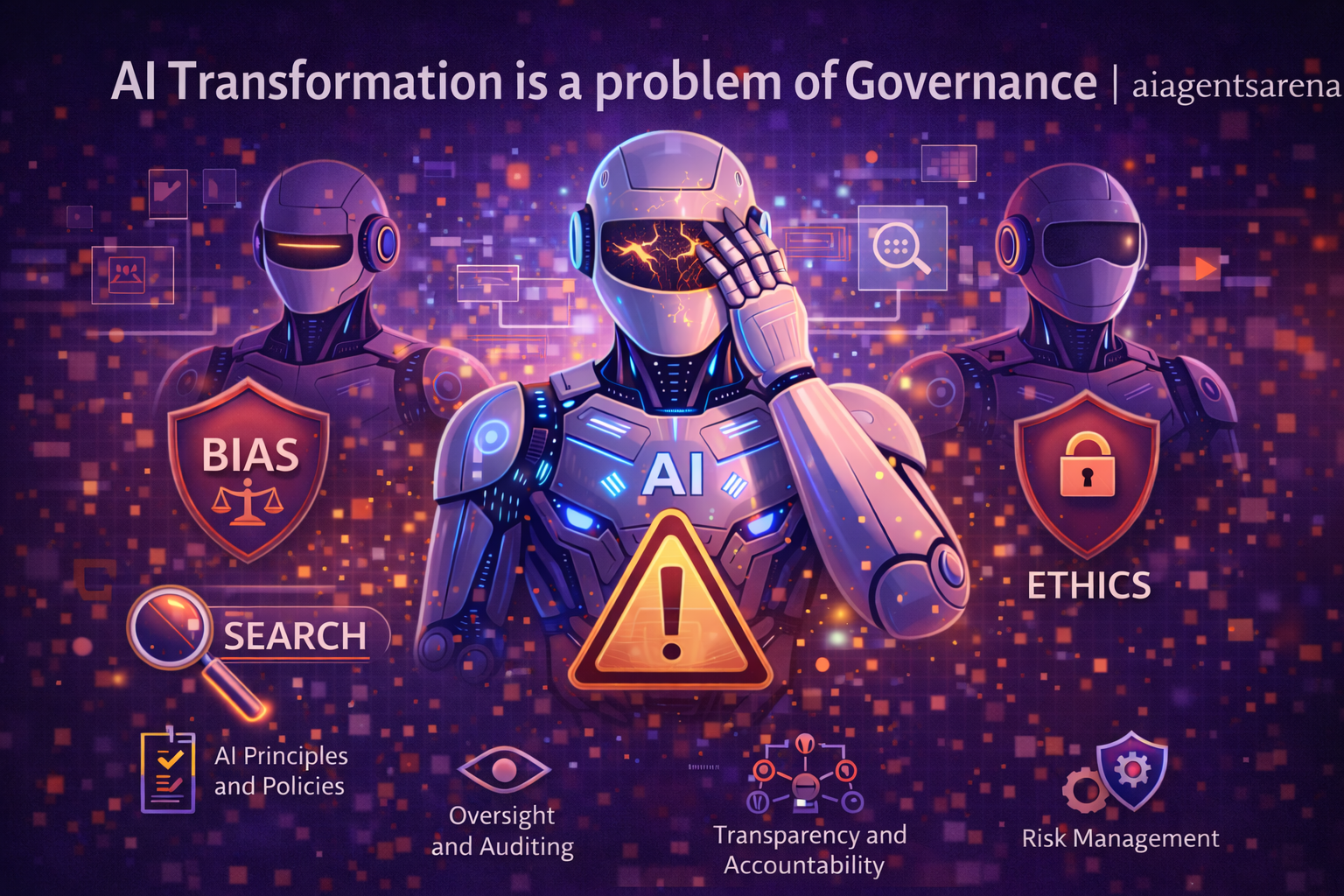
AI Transformation is a problem of Governance | aiagentsarena
Many business owners think buying the latest software will solve all their problems. They believe that more computing power is the key to growth. But, success really comes from your strategy, not just the tools.
We must understand that ai transformation is a problem of governance, not just a tech upgrade. Without clear rules and oversight, even top systems won’t bring value. You need a strong plan to guide your automation journey.

By focusing on leadership and structure, you can control your business’s success. Good oversight makes sure your tech works for you, not against you. Let’s look at how to build a solid foundation today.
Key Takeaways
- Technology alone cannot fix broken business processes.
- Leadership and clear rules are the primary drivers of automation success.
- Governance provides the necessary structure for sustainable growth.
- Small business owners must prioritize strategy over raw computing power.
- Effective oversight turns complex tools into simple, actionable assets.
The Shift from Technical Implementation to Governance
The secret to successful digital transformation isn’t in the code. It’s in how you manage your people and processes. Many think buying the right software is the end. But, it’s just the start.
Why Technology Alone Fails
Did you know 70% of transformation problems come from people and process issues, not tech? Focusing only on technical capability ignores the human side. This leads to projects that stall and resources wasted.
Technology is just a tool, not a solution. Without a solid strategy, even top artificial intelligence won’t pay off. You need to align your team to adopt new ways of working.
Defining the Governance Gap in AI
The governance gap is the space between using a tool and its lasting impact. Many face big governance challenges that stop their progress. To overcome this, you must build a strong foundation for your projects.
The table below shows the difference between focusing only on tech and a governance-led approach:
| Feature | Technical-Only Approach | Governance-Led Approach |
|---|---|---|
| Primary Focus | Software installation | Process integration |
| Accountability | Undefined or unclear | Defined roles and oversight |
| Long-term Result | High risk of failure | Sustainable growth |
| Resource Usage | Wasted on unused tools | Optimized for efficiency |
By focusing on accountability and oversight, you build a strong base for success. This approach ensures your tech supports your goals, not the other way around. You’re now set to grow with your ambitions.
The Discourse on AI Transformation is a Problem of Governance on Twitter
If you’re active on X, you’ve probably noticed a shift in the AI conversation. For years, we talked mostly about new models and tech. Now, we’re focusing more on the human side of managing these tools in business.
Leaders are now open about their failures. They talk about how poor oversight can waste budgets and slow down projects. This openness is key for those trying to tackle governance challenges.
Analyzing the Viral Conversations
These discussions are going viral because many organizations face similar issues. Experts share their struggles, pointing out that the main problem isn’t the tech itself. It’s the lack of clear rules, defined roles, and consistent policies.
These threads act as a crowdsourced manual for what not to do. By watching these debates, you can spot common pitfalls that trap teams. Without a solid foundation, even top AI can’t deliver real value.
Key Voices Shaping the Narrative on X com
A mix of consultants, CTOs, and experts are leading the conversation on X com. They give a straight-up view on why ai transformation is a problem of governance. They focus on practical steps, not just theory.
They stress that governance challenges affect all sizes of businesses. Whether you’re a solo entrepreneur or a small business owner, accountability is crucial. Following these leaders helps you stay ahead and build a strong, AI-ready team.
Case Study: The Failure of Unregulated AI Adoption
The story of unchecked technology adoption often ends in lost data and legal costs. Businesses that rush to use new tools without a plan create a risky environment. They might think they’re getting more efficient, but they’re actually building a fragile structure.
Identifying the Organizational Blind Spots
Most organizations fail because they lack clear usage policies. Without leadership defining artificial intelligence use, employees make their own rules. This leads to a messy situation where different teams use different, untested software.
These blind spots show up in three main ways:
- Lack of vetting: Employees use free tools that don’t meet security standards.
- Data leakage: Sensitive company info is shared without permission.
- Policy ambiguity: Staff is unsure what’s okay to use, leading to mistakes.
The Cost of Shadow AI in the Workplace
Shadow AI happens when teams use unauthorized software for their work. These tools might seem safe, but they’re a big security risk. By avoiding IT, employees open a door to your company’s data.
The legal and financial costs are huge. For example, the EU AI Act has fines as high as GDPR. If your technology adoption plan doesn’t cover these risks, you could face big penalties.
There are also hidden costs:
- Increased IT overhead: Dealing with unauthorized software is costly and time-consuming.
- Loss of intellectual property: Using data in public artificial intelligence tools can lead to data theft.
- Fragmented workflows: Using different tools makes it hard for teams to work together.
Establishing a Framework for AI Oversight
Creating a strong AI oversight framework is key to overcoming governance challenges. You don’t need to be a tech expert to set up these safeguards. A clear structure lets your team innovate fast while keeping safety standards high.

Defining Roles and Responsibilities
Good frameworks make it clear where human oversight is crucial. You need to define who makes AI-driven decisions to avoid mistakes. When everyone knows their role, errors drop and efficiency goes up.
Assign specific oversight tasks to avoid delays. For example, a project lead can do daily monitoring, and a department head can check high-risk automated outputs. This way, accountability stays strong even with automation.
Creating Ethical AI Usage Policies
Your ethical usage policies are like guardrails for your business. They should clearly state what’s okay and what’s not with AI tools. This lets employees try new things with confidence, knowing they’re safe.
Dealing with governance challenges means being proactive with your policies. Focus on being open, protecting data, and avoiding bias in algorithms. Here’s a table showing how different roles help with AI governance:
| Role | Primary Responsibility | Governance Focus |
|---|---|---|
| Business Owner | Strategic Alignment | Risk Mitigation |
| Project Manager | Operational Oversight | Compliance Tracking |
| Team Member | Ethical Tool Usage | Data Integrity |
By setting up these roles, you turn governance into a strategic asset. This structured way lets you grow your AI efforts without losing your values or safety.
Data Governance as the Foundation of AI Success
Data governance is key to AI success. Even with top tools, bad data can harm your system. Treat your data as a valuable asset, not just digital junk.
Ensuring Data Integrity and Quality
To get good AI results, focus on data integrity. Set clear rules for data collection, storage, and updates. Bad input means bad AI results, leading to poor decisions.
Begin by cleaning your databases to get rid of duplicates and old data. Use a consistent format for your records. This helps your automation tools work right. Clean data is crucial for reliable automation.
“The fanciest algorithm becomes useless or worse, dangerous when fed compromised data.”
Managing Privacy and Compliance Risks
As you grow your AI, protect customer data. Good data governance keeps your AI in line with laws like GDPR or CCPA. Never trade off security for speed or ease.
Check your AI tools often to see how they handle personal info. Limit access to sensitive data and use secure encryption methods. This reduces data breach risks. Keeping these standards builds trust with clients and protects your business from legal issues.
Bridging the Gap Between IT and Business Leadership
You can turn your AI investments into measurable growth by aligning your technical capabilities with your core business strategies. Companies often treat technology as a separate department. This creates silos that stall progress and waste resources.
Effective governance acts as a guardrail, allowing you to drive faster safely. When your IT team understands the high-level vision, they can build tools that actually solve real-world problems. This synergy is the hallmark of a successful digital transformation.
Aligning AI Strategy with Corporate Goals
Your AI initiatives must serve a clear purpose. If you implement automation without a direct link to your business strategies, you risk creating complexity without adding value. Start by defining what success looks like for your organization, whether that is reducing overhead or improving customer response times.
When leadership and IT share a common language, they can prioritize projects that offer the highest return on investment. This alignment ensures that every dollar spent on AI contributes to your long-term growth. It moves the conversation from “what can we build” to “what should we build to win.”
The Role of the Chief AI Officer
The emergence of the Chief AI Officer (CAIO) represents a vital shift in organizational structure. This role acts as the primary translator between technical teams and executive leadership. By overseeing the digital transformation process, the CAIO ensures that ethical standards and operational goals remain in sync.
Without this dedicated oversight, technical teams may focus on features while business leaders focus on margins. The CAIO bridges this gap, ensuring that innovation remains grounded in reality. Consider how these leadership styles differ when managing new technology:
| Focus Area | Traditional IT Leadership | Modern AI-Integrated Leadership |
|---|---|---|
| Primary Goal | System uptime and stability | Strategic value and innovation |
| Decision Driver | Technical feasibility | Business outcome and ethics |
| Risk Management | Avoiding security breaches | Managing bias and compliance |
| Communication | Technical documentation | Cross-departmental alignment |
Democratizing AI Automation Through Controlled Access
Smart business leaders empower staff while keeping things safe. You don’t have to pick between new ideas and security with artificial intelligence. Give your team safe, approved tools to meet their needs and protect your business.
Empowering Employees While Maintaining Guardrails
Give your employees the right tools to encourage proactive innovation. Instead of banning new software, create a safe space for them to try new things. This way, your team stays productive and secure.
“The goal of governance is not to stifle creativity, but to provide a safe playground where the best ideas can flourish without risking the integrity of the business.”
Good business strategies mean clear rules about what’s okay and what’s not. When employees know why the rules are in place, they’re more likely to follow them. This builds trust and promotes responsible use of automation.
Tools for Scalable AI Governance
To grow, you need systems that can keep up. Strong data governance lets you track how data moves through your tools. This way, you can control things while still giving your team the freedom to tackle tough problems.
The table below shows how different access levels affect your security and team’s work:
| Governance Level | Employee Freedom | Security Risk | Primary Benefit |
|---|---|---|---|
| Restricted | Low | Minimal | High Compliance |
| Managed | Moderate | Controlled | Balanced Growth |
| Open | High | Significant | Rapid Innovation |
Picking the right tools is key for success. Look for platforms with dashboards, audit logs, and access controls. These features keep your artificial intelligence safe, efficient, and on track as you grow.
Navigating Ethical Considerations and Bias
Using AI means making choices that affect your customers. It’s key to think about ethical considerations every day. This helps protect your brand’s reputation. By focusing on fairness, your tools will help your business without causing harm.

Mitigating Algorithmic Risks
Algorithms can reflect biases in the data they’re trained on. If your data is biased, your AI will be too. It’s crucial to check your data regularly for any hidden biases.
Proactive monitoring helps avoid these issues. Testing AI models with different scenarios can spot problems early. This keeps your decisions fair and reliable.
“Technology is best when it brings people together, but it must be guided by a clear moral compass to ensure that the outcomes remain equitable for everyone involved.”
Transparency and Accountability in Decision Making
Being open about how decisions are made is important. This builds trust with your audience. It shows you’re a responsible business.
Being accountable means owning up to every automated action. Keep a record of how your data governance affects decisions. Use the table below to check your risk management.
| Risk Level | Potential Impact | Mitigation Strategy |
|---|---|---|
| Low | Minor operational delay | Regular software updates |
| Medium | Customer service friction | Human-in-the-loop review |
| High | Ethical or legal bias | Full transparency documentation |
By always thinking about ethical considerations, you lead in the AI world. You’re not just automating; you’re building a strong foundation of integrity.
Adapting Organizational Culture for AI Maturity
You can’t just buy AI maturity; you need to create a supportive environment. True digital transformation is about how your team uses technology every day. By focusing on people and technology together, you build a strong foundation.
Managing Change and Employee Resistance
Introducing new tools can make staff worried about their jobs. To handle this organizational change, be open about why you’re using AI. Tell them it’s to help, not replace, human skills.
Start a conversation where staff can share their worries safely. When they see AI taking over boring tasks, they might start to like it. Empowerment through education helps fight against resistance.
Continuous Learning and Governance Evolution
The world of automation changes fast, making old rules useless. Use a system like ISO/IEC 42001 for AI management. It focuses on ethics-by-design, keeping your growth responsible.
To keep ethics in your daily work, commit to training. As your team gets better, your rules need to change too. This cycle keeps your business quick and competitive.
| Focus Area | Traditional Mindset | AI-Mature Mindset |
|---|---|---|
| Technology Adoption | Fear of disruption | Proactive experimentation |
| Skill Development | Static job roles | Continuous upskilling |
| Governance | Rigid, top-down rules | Adaptive, ethical frameworks |
| Decision Making | Intuition-based | Data-informed collaboration |
Conclusion
AI transformation is more than just a technical update. It changes how you handle risk and value in your company. Now, you have tools to go beyond simple software use and create a framework that protects your long-term goals.
Good business strategies need clear leadership. By focusing on oversight, you can turn potential chaos into a competitive edge. This ensures your operations stay trustworthy in a fast-changing market.
Real change in your organization begins with accountability. You must set clear roles and keep strict data standards for lasting results. These steps help avoid common pitfalls that trap many leaders.
Start using these governance practices today. Your focus on structure will secure your growth and keep your brand ahead. Begin your journey to a sustainable and automated future now.
FAQ
What does it mean when experts say ai transformation is a problem of governance?
Experts say AI success in business isn’t just about the code. It’s about leadership, rules, and oversight. Many treat AI like a “set it and forget it” tool. But without clear rules, it often fails to deliver value.Governance keeps your digital transformation on track with your business goals.
Why does focusing only on technology adoption often lead to stalled projects?
Focusing too much on tools and not enough on oversight leads to the “governance gap.” This gap happens when powerful platforms like Salesforce Einstein or Microsoft Copilot aren’t managed well.Without clear accountability, projects fail to solve real problems. They look good on paper but don’t work in practice.
What are the primary governance challenges highlighted by industry experts on X?
Experts on X say scalability and hidden risks are big issues. They argue that treating AI as an IT project, not a management shift, is a problem. The winners are those who set up strong “guardrails” early on.
What is “Shadow AI” and how does it create hidden risks for my business?
Shadow AI happens when teams use unauthorized tools for company data. This is a big security risk. Without a clear framework, you lose control over your data, leading to compliance failures and data breaches.
How can I build a governance framework without creating a bureaucratic hurdle?
Good governance empowers your team, not holds them back. Start by defining roles and creating simple usage policies. This lets your team innovate safely, moving your business forward.
Why is data governance considered the most critical component of AI success?
AI’s quality depends on the data it uses. Data governance ensures this data is reliable. Without it, AI can produce wrong insights. Good data governance leads to trustworthy results.
Does a small business really need a Chief AI Officer to manage business strategies?
You don’t need a new C-suite hire, but someone must take on that role. This person connects technical tools to business goals. They ensure AI drives growth and supports the company’s vision.
How can I democratize AI access for my team while maintaining security?
Use “sandboxed” environments for safe experimentation. Choose tools that protect your data, like OpenAI’s Team or Enterprise tiers. This way, your team can automate without risking your business.
What are the most important ethical considerations when implementing AI?
The biggest ethical issue is avoiding algorithmic bias. Ensure AI tools don’t discriminate. Transparency in AI processes is key for trust and responsibility.
How do I manage organizational change and employee resistance during an AI rollout?
Resistance comes from fear or job loss. Emphasize AI as a tool for improvement, not replacement. Focus on learning and show how automation frees up time for meaningful work. Involve your team in governance to build trust and investment.

Interesting take on governance and AI. Do you think there’s a way to balance innovation with regulation effectively?
Great question! I think the key is creating flexible regulations that evolve with technology, rather than rigid rules that slow innovation. Collaboration between governments, developers, and organizations can help ensure safety without limiting progress.